- Your cart is empty
- Continue Shopping


Medical Trends 2026: AI, Vaccines & Future of Healthcare
- Pharmacy
- Posted on
-
by Zyloxd
- 0 comments
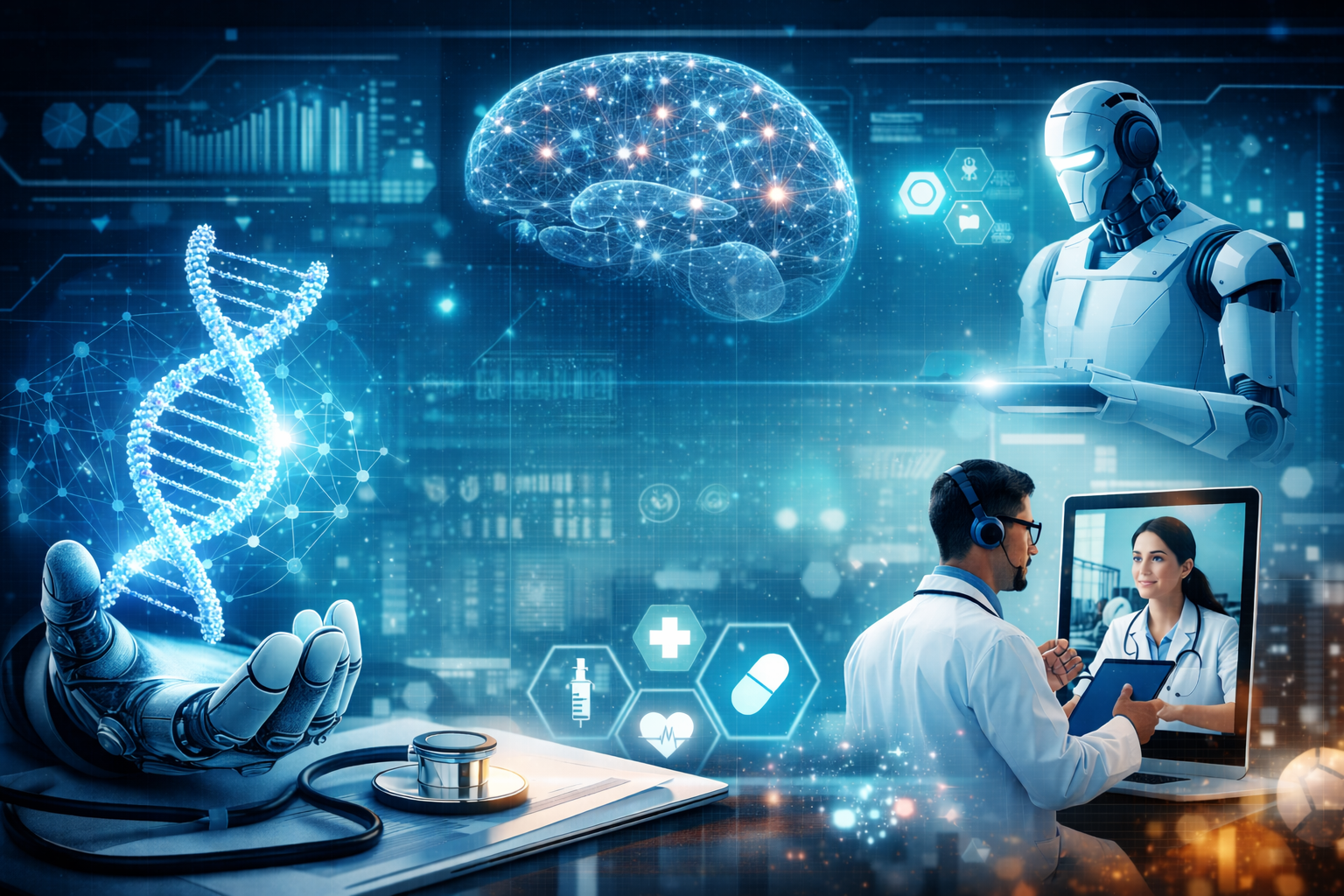
Medical Trends 2026 are redefining how patients receive care, how doctors diagnose disease, and how healthcare systems operate globally. From artificial intelligence in hospitals to precision medicine and telehealth expansion, medical trends 2026 show a powerful shift toward personalized, preventive, and technology-driven healthcare.
In this in-depth guide, we explore the most important medical trends 2026, their real-world impact, and what they mean for patients, professionals, and the future of medicine.
🚀 Artificial Intelligence in Medical Trends 2026
Artificial intelligence is one of the biggest drivers behind medical trends 2026.
AI is now used in:
- Radiology image analysis
- Early cancer detection
- Heart disease risk prediction
- Hospital workflow automation
According to research published by World Health Organization, AI has the potential to improve global healthcare access while reducing diagnostic errors.
You can also read more about digital health transformation from Harvard Medical School research publications.
1️⃣ Artificial Intelligence Is Reshaping Clinical Practice
Artificial Intelligence (AI) is no longer futuristic — it is actively integrated into hospitals, clinics, and research laboratories.
🔍 AI in Diagnostics
AI-powered systems are now:
- Detecting early-stage cancers through imaging analysis
- Identifying diabetic retinopathy from retinal scans
- Predicting heart disease risk using patient data models
- Assisting radiologists with faster scan interpretation
Machine learning algorithms can process thousands of medical images within seconds, helping physicians detect abnormalities earlier and more accurately.
🧠 AI in Predictive Medicine
Predictive analytics tools are being used to:
- Forecast hospital readmissions
- Identify high-risk patients
- Prevent complications in chronic diseases
This proactive approach shifts healthcare from reactive treatment to preventive intervention.
⚖️ Ethical Concerns
However, AI in medicine raises concerns about:
- Data privacy
- Algorithm bias
- Over-reliance on automation
- Regulatory oversight
Experts emphasize that AI should assist doctors — not replace them.
2️⃣ Personalized & Precision Medicine Is Expanding Rapidly
One of the most exciting developments in modern medicine is precision medicine — tailoring treatments based on an individual’s genetic profile, lifestyle, and environment.
🧬 Genetic Testing & Targeted Therapies
Doctors can now:
- Identify cancer mutations and prescribe targeted drugs
- Use pharmacogenomics to determine how patients respond to medications
- Customize treatment for rare genetic disorders
This reduces side effects and improves treatment outcomes.
🧪 mRNA & Advanced Vaccine Technologies
After the success of mRNA vaccines in recent years, researchers are expanding their use for:
- Cancer immunotherapy
- HIV vaccine development
- Autoimmune disease treatment
This technology allows faster vaccine development and more adaptable treatment models.
3️⃣ Telemedicine Is Becoming a Standard of Care
Telehealth is no longer an emergency solution — it is now a permanent part of healthcare delivery.
📱 Growth of Virtual Consultations
Patients are increasingly using:
- Video consultations
- Remote prescription services
- Online mental health therapy
- Chronic disease monitoring apps
Telemedicine improves access, especially in rural and underserved areas.
📊 Remote Patient Monitoring
Wearable devices now track:
- Blood pressure
- Glucose levels
- Heart rhythm
- Oxygen saturation
Doctors can monitor patients in real-time without hospital admission.
4️⃣ Global Public Health Concerns Remain a Priority
Even with medical advancements, infectious diseases continue to challenge health systems.
🦠 Resurgence of Preventable Diseases
Health authorities have reported outbreaks of:
- Measles
- Influenza
- Drug-resistant tuberculosis
These outbreaks highlight gaps in vaccination coverage and public health awareness.
💉 Vaccine Hesitancy & Education
Medical experts stress the importance of:
- Public education campaigns
- Transparent communication
- Combating misinformation online
Public health depends not only on medicine but also on trust and awareness.
5️⃣ Mental Health Is Finally Receiving Global Attention
Mental health is one of the most searched and discussed medical topics today.
🧠 Rising Awareness
Increased awareness of:
- Anxiety disorders
- Depression
- Burnout
- PTSD
has led to greater acceptance and treatment seeking.
💻 Digital Mental Health Tools
Apps now offer:
- Guided therapy
- Cognitive behavioral exercises
- Mood tracking
- AI-powered counseling bots
Though helpful, experts warn these tools should complement — not replace — professional care.
6️⃣ Chronic Diseases Continue to Drive Healthcare Demand
Non-communicable diseases (NCDs) remain the leading cause of death globally.
❤️ Cardiovascular Disease
Still the number one global killer, driven by:
- Poor diet
- Sedentary lifestyle
- Smoking
- Stress
🍬 Diabetes & Obesity
Rising rates of type 2 diabetes are linked to:
- Urbanization
- Processed foods
- Reduced physical activity
Healthcare systems are focusing on prevention, early detection, and lifestyle medicine.
7️⃣ Rising Healthcare Costs & Accessibility Issues
Despite technological progress, affordability remains a major concern.
💰 Increasing Costs
Patients face:
- Higher insurance premiums
- Expensive medications
- Costly diagnostic procedures
🌍 Global Inequality
Access to quality healthcare differs dramatically between:
- Urban and rural regions
- High-income and low-income countries
Experts advocate for:
- Universal healthcare models
- Policy reforms
- Affordable drug pricing regulations
8️⃣ Breakthrough Medical Research in 2026
Scientific innovation continues at an extraordinary pace.
🔬 Cancer Research
New advancements include:
- CAR-T cell therapies
- Cancer vaccines
- Early blood-based cancer detection tests
🧬 Gene Editing & CRISPR
Researchers are exploring treatments for:
- Sickle cell disease
- Genetic blindness
- Inherited metabolic disorders
🧠 Neurodegenerative Diseases
Ongoing trials aim to slow progression of:
- Alzheimer’s disease
- Parkinson’s disease
- Multiple sclerosis
Though many therapies are still in clinical trials, the future looks promising.
9️⃣ The Role of Lifestyle Medicine
Doctors are increasingly emphasizing prevention over cure.
🥗 Diet & Nutrition
Evidence shows that:
- Plant-based diets
- Reduced sugar intake
- Balanced macronutrients
can significantly lower disease risk.
🏃 Physical Activity
Regular exercise reduces:
- Cardiovascular risk
- Depression symptoms
- Diabetes risk
😴 Sleep & Stress Management
Sleep quality and stress reduction are now recognized as pillars of health.
🔟 The Future of Medicine: What Comes Next?
Experts predict that the next decade will bring:
- Fully AI-assisted diagnostic systems
- More gene-based treatments
- Advanced robotic surgeries
- Personalized digital health dashboards
- Expansion of home-based healthcare
Medicine is moving toward a preventive, personalized, and technology-driven model.
🏥 Final Thoughts
2026 marks a transformative period in medicine. While groundbreaking innovations promise better treatments and longer lifespans, global health systems must address affordability, accessibility, and ethical challenges.
For patients, staying informed is more important than ever. For healthcare providers, adapting to new technologies and patient expectations is critical.
At Zyloxd.com, we are committed to bringing you trusted medical insights, research updates, and health guidance to help you navigate the rapidly evolving world of medicine.
